The Full Hunter’s Moon is a time to prepare for winter.
I captured this full moon rising over the pond with a great weathered barn in the distance. The mallards are gathered at the cattail marsh before they begin picking on each other and pairing up.
A Hunter’s Moon comes from the Native American tribes who found it easy to find game after all the harvests were in and the leaves were falling from the trees. The game was fattened for the winter and very easy to see as they moved about in their winter preparations.
In addition, the Hunter’s Moon is also known as the Blood Moon, Harvest Moon or the Sanguine Moon.
Because this moon was so close to winter, this moon is given greater significance due to the winter festivals and the preparation for winter.
Howl at the moon and enjoy the reflection in the pond.
This month it was tough to choose. Since we had gone on vacation for the first part of the month, there were so many photos from Yosemite, the Sierra Nevadas, northern California and parts of Idaho, that choosing a photo for this month was hard.
I decided upon this barren landscape of an area that maybe many do not know anything about. This is from Craters of the Moon National Park in Idaho. Over 600 miles of flowing lava covered the Idaho landscape. This lava was from beneath the earth and worked its way out through cracks and fissures rather than an exploding cone like Mt. St. Helen’s. This lava flow is iridescent and is an amazing sight.
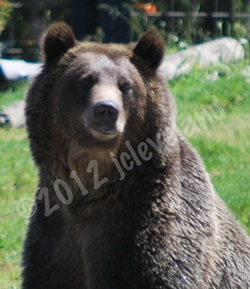
Not as in how to deal with bears 101, but this is bear 101. She is the 101st grizzly tagged in Yellowstone and lived quite nicely amongst the tourists, rangers and other wildlife in Yellowstone for 20 years. Until someone made a large mistake and 101 learned about garbage, pet food and other foods unhealthy for bears. She also made a mistake and taught her cubs how to forage in the town, which is usually a death sentence for a grizzly.
Instead, she is housed at the Wolf and Grizzly Discovery Center in West Yellowstone. Her cubs are in a good home and both are no longer in danger of being killed for being a danger to humans. 101 had a hard time adjusting to captivity, but the center is very good at taking care of their animals. Since bears naturally forage and hunt for their food, the daily feeding at the center consists of kids working with park workers to hide food throughout the enclosure. This requires the bears to turn over logs, hunt through brush and move rocks to find food. She is magnificent and beautiful and very dangerous.
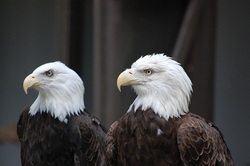
These two were on display at Wildlife Prairie Park in Peoria, Illinois when I traveled back for a week of family fun. I dubbed them George and Martha because for some reason they reminded me of the Washingtons. I do not know why they did, but I stand by decision to give them the nickname.
I can see why these magnificent birds are our national bird and other than the fact that turkey is a delightful holiday treat, I see no reason for Franklin’s nomination for the turkey as the national symbol.
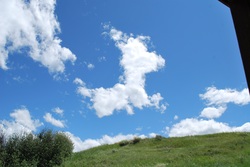
I looked out my window, and Snoopy was bounding over the hill. By the time I grabbed my camera and poked my head around the corner his ears had disappeared, but he still was cute and I thought he made a great photo.
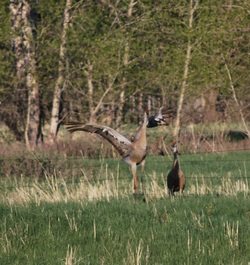
Apparently this type of behavior from Sandhill cranes makes them irresistible to the ladies. Accompany all your jumps with loud ear splitting cries and everyone will fall in love with you.
Actually, these guys are some really neat cranes and they were a great surprise to me when I first came to the mountains in the spring. I am used to seeing them nesting in the winters in Florida where they raise their chicks.
I never knew where they went during the rest of the year, so the first time I heard their call, I knew exactly what I was hearing.
While they are residents of the Platte River, they enjoy a migration to Albuquerque where they have an annual festival. In Florida, we don’t hold a festival for them, but we really should. They are quite remarkable and quirky birds.
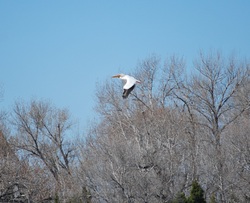
I could not believe I was seeing this when it came winging down the headwaters of the Missouri at me, but sure enough, here was not one, but five beautiful white pelicans.
Right there in the bed of the Three Forks, Montana. They were casually floating along the Missouri River headwaters as they merged with the Jefferson River, Madison River and the Gallatin River before heading on their journey to the Mississippi River.
This guy had a fish that he had snagged from the river, which was a lot better than the lady fly fishing upstream from him was doing.
The white pelican apparently travels all over the country and is protected by the Migratory Bird Treaty Act of 1918. He was the last thing I expected to see when I went to see the landing site of the great Lewis and Clark expedition.
The 1950 Ford was the next year of the redesigned 1949 Ford, which generated over $177 million in profits for the Ford Motor Company. These restyled vehicles were in the garages of returning servicemen and their mothers. Over 28 million people wandered into showrooms across the country within three days of the day the 1949 rolled out.
These vehicles are not rare, but even in their excessive popularity, there is still something uniquely proud about the nose of these cars.
While this one watches me from behind barn brush, it still has the character and personality of the good looking car it was in its heyday.
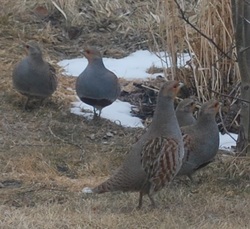
Sounds a lot like a CSNY song, but these little guys have taken up residence in the front yard. They are skittish and fly off and about willy nilly if they are startled, but they are extremely social and enjoy moving about as a group.
They appear to be grey partridge and for the longest time, I have called them grouse. No wonder they always looked at me funny.
They do love to hide under the bushes and travel in this little group of five.
Do you know what the difference is between a Yankee and a Damn Yankee? The Damn Yankee never goes back home after they come to Florida. I am a Damn Yankee. From Illinois, so …
Besides sun and surf, do you know what else is different between Florida and Illinois, or any other civilized state in the union? They have grass; Florida does not.
I don’t know what that stuff is in the yard, but it is not grass. Grass is long and tickles your feet when you’re barefoot. It is lush and green, and while it may have some dandelions and weeds, it does not have cockroaches living in it.
Florida has native grasses. The difference is that Florida grasses grow in clumps like Elliott’s Lovegrass, but does not cover any turf. The closest wild grass that covered Florida’s turf before the development of the state is arstidia stricta or wiregrass as it is commonly called. It thrives in hot, sandy, pinelands and adores poorly drained soils like those on the Florida prairies, but it also clumps. It does not do well in the coastal areas where it is subject to salt air.
Craig Huegel wrote a report on using native grasses for lawns in The Understory in 1998 reprinted in the Pinellas Chapter FNPS that still rings true today. That Florida does not want native grasses. They want grasses that look pretty.
Pros and Cons of Florida Grass
Pros:
Heat and drought tolerant
Low maintenance with minimal watering, fertilizing, and mowing
Versatile selections for most landscape needs
Cons
Susceptible to disease and pests
Limited shade tolerance
Costly choices
Here are some of the most common grasses used in landscaping and on lawns today:
St. Augustine grass: A warm-season grass that is widely used in Florida due to its tolerance to heat and humidity. It has a dense, lush appearance and is well-suited to low-traffic areas.
Bermuda grass: Another warm-season grass, Bermuda grass is known for its high heat and drought tolerance. It is often used in sports fields and golf courses in Florida. We got some golf courses!
Zoysia grass: Zoysia is a warm-season grass that is known for its fine texture and ability to grow in a variety of soils. It is also relatively low maintenance.
Centipedegrass: Centipedegrass is a slow-growing warm-season grass that is well-suited to areas with limited maintenance resources. It is commonly used in parks and other public spaces.
Bahia grass: Bahia grass is a warm-season grass that is commonly used in pastures and for erosion control. It is a low-maintenance grass that is tolerant to heat and drought.
Seashore Paspalum: A warm-season grass, Seashore Paspalum is known for its salt tolerance, making it a popular choice for landscaping near saltwater.
Buffalo grass: A warm-season grass, Buffalo grass is known for its low-maintenance requirements and ability to thrive in a wide range of soils. It is commonly used in parks and other public spaces.
What is the easiest grass to maintain in Florida?
Taking into consideration climate, soil type, and lawn use, the easiest grass with the lowest maintenance will always be a winner. Here are some of the easiest grasses to maintain in Florida:
What is the difference between growing grass on the coast as opposed to inland Florida?
When choosing your grass, you have to consider your location in the state. Here are some breakdowns on the differences between coastal and inland grass based on the needs of the area like salt tolerance.
Coastal Florida Grass Needs:
Salt tolerance: Coastal areas are often exposed to salt spray from the ocean, which can be harmful to some grass types. Seashore Paspalum and Bermuda grass are two examples of grass varieties that are highly salt-tolerant and well-suited to coastal areas.
Moisture: Coastal areas tend to have higher humidity and more rainfall, which can make it easier to maintain a healthy lawn.
Soil: Coastal soils are often sandy and well-drained, which can affect the type of grass that can be grown in these areas.
Inland Florida Grass Needs:
Heat and drought tolerance: Inland areas are subject to hotter temperatures and less rainfall, making it important to choose a drought-tolerant grass type. Bermuda grass and Zoysia grass are well-suited to these conditions.
Soil: Inland soils can vary greatly, with some areas having clay or heavy soils that can make it more challenging to grow a healthy lawn.
Shaded areas: Inland areas are often subject to more shade due to the presence of trees, making it important to choose a shade-tolerant grass type. St. Augustine grass is relatively shade-tolerant.
What types of bugs and grass diseases are there in Florida grass?
If you’ve been to Florida, you know that we grow our bugs BIG. Did you know they live under your feet, too? Yay for us.
Florida Lawn Bugs:
Chinch bugs: Chinch bugs are small, red, and black insects that can cause significant damage to lawns. They feed on the sap of grass plants and can cause yellow patches in lawns.
Armyworms: Armyworms are caterpillar-like insects that can cause damage to grass by feeding on the blades. They can cause large, irregularly shaped holes in lawns.
Mole crickets: Mole crickets are insects that can cause significant damage to lawns by burrowing in the soil and feeding on the roots of grass plants. The first time I saw one of these, I was sure it was a mutant of some sort.
Sod webworms: Sod webworms are caterpillar-like insects that feed on grass blades, causing small, irregularly shaped brown patches in lawns.
Florida Lawn Diseases:
Brown patch: Brown patch is a fungal disease that affects warm-season grasses and can cause circular patches of brown, dead grass in lawns.
Dollar spot: Dollar spot is a fungal disease that affects warm-season grasses and can cause small, circular patches of tan or brown grass in lawns.
Gray leaf spot: Gray leaf spot is a fungal disease that affects St. Augustine grass and can cause gray or brown patches on the leaves of grass plants.
Fairy ring: Fairy ring is a fungal disease that affects lawns and can cause circular patches of dark green or yellow grass surrounded by brown grass.
To prevent or control these pests and diseases, it is important to practice good lawn care techniques, such as mowing at the recommended height, watering deeply and infrequently, and fertilizing appropriately. It is also helpful to consult with a local landscaping professional or horticulturist if you suspect a pest or disease problem. Florida is hot and humid, so fungus lives everywhere.
Should I hire a landscaper to care for my Florida grass? As I look out onto my lawn of sand and dirt, I would go with a big “yes” to that question. As to whether you want to hire someone to take care of your lawn depends on whether or not you want to take care of it and your level of expertise in lawn maintenance and landscaping.
Here are some benefits of hiring a professional landscaper:
Expertise: Landscapers have the expertise and experience to care for your lawn properly, including identifying and treating any pests or diseases that may arise.
Time-saving: Hiring a landscaper to care for your lawn can save you time and effort. It also cuts down on your frustration level when it seems like a losing battle.
High-quality results: A professional landscaper can provide high-quality results, helping to ensure that your lawn is healthy and attractive.
Equipment: Landscapers typically have access to professional-grade equipment, such as mowers, edgers, and fertilization equipment, that can make lawn care easier and more efficient.
Consistency: Hiring a landscaper can ensure that your lawn is consistently cared for, helping to avoid issues such as over- or under-fertilization, irregular mowing, or improper watering.
There is nothing more beautiful than a green yard with lots of budding flowers in it, and Florida is the perfect place to grow some of the most colorful flowers all year round, but grass? Not so much. It is doable, but you have to spend a lot of time and money to get the lawn you want.
One thing for certain, a beautiful lawn helps to raise the resale value of your home, and that’s always a good thing.




 Julie L. Cleveland