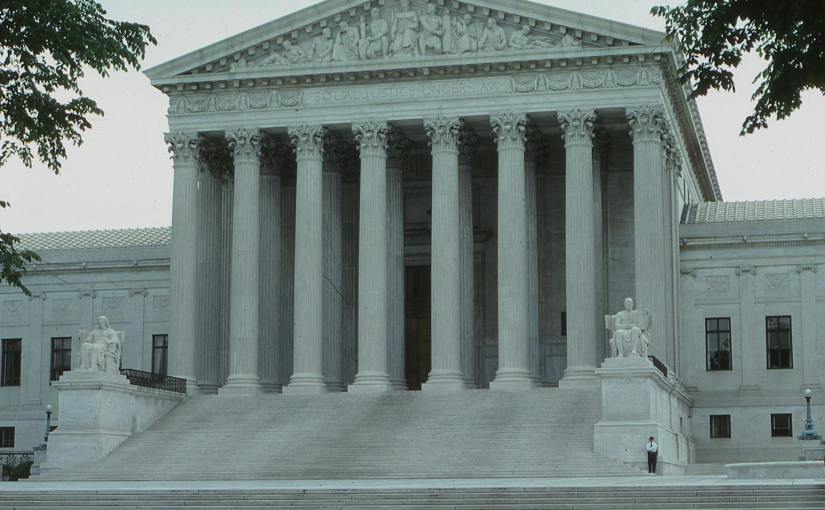
Can you answer these landmark Supreme Court decisions trivia questions? Some of these may be harder than others.
15 Landmark Supreme Court Decisions Trivia Questions
- Q: What 1803 case established the principle of judicial review in the United States?
- Q: What 1954 case declared racial segregation in public schools unconstitutional?
- Q: Which 1973 case recognized a woman’s right to choose to have an abortion?
- Q: What 1966 case required police to inform suspects of their rights, including the right to remain silent?
- Q: Which 1963 case guaranteed the right to legal counsel for criminal defendants unable to afford an attorney?
- Q: What 1896 case upheld racial segregation under the “separate but equal” doctrine?
- Q: Which 2015 case legalized same-sex marriage nationwide in the United States?
- Q: What 1978 case addressed affirmative action in college admissions?
- Q: Which 2010 case allowed unlimited corporate spending in elections, citing free speech?
- Q: What 2012 case upheld the constitutionality of the Affordable Care Act’s individual mandate?
- Q: Which 1857 case ruled that African Americans could not be U.S. citizens?
- Q: What 2008 case affirmed the Second Amendment right to individual gun ownership?
- Q: Which 2014 case ruled that police need a warrant to search a suspect’s cell phone?
- Q: What 1962 case prohibited mandatory prayer in public schools?
- Q: What 2000 case effectively decided the outcome of the presidential election between George W. Bush and Al Gore?
Help support my posts by shopping or sharing my art – thank you!



15 Landmark Supreme Court Decisions Trivia Questions and Answers
- Q: What 1803 case established the principle of judicial review in the United States? A: Marbury v. Madison.
- Q: What 1954 case declared racial segregation in public schools unconstitutional? A: Brown v. Board of Education.
- Q: Which 1973 case recognized a woman’s right to choose to have an abortion? A: Roe v. Wade.
- Q: What 1966 case required police to inform suspects of their rights, including the right to remain silent? A: Miranda v. Arizona.
- Q: Which 1963 case guaranteed the right to legal counsel for criminal defendants unable to afford an attorney? A: Gideon v. Wainwright.
- Q: What 1896 case upheld racial segregation under the “separate but equal” doctrine? A: Plessy v. Ferguson.
- Q: Which 2015 case legalized same-sex marriage nationwide in the United States? A: Obergefell v. Hodges.
- Q: What 1978 case addressed affirmative action in college admissions? A: Regents of the University of California v. Bakke.
- Q: Which 2010 case allowed unlimited corporate spending in elections, citing free speech? A: Citizens United v. Federal Election Commission.
- Q: What 2012 case upheld the constitutionality of the Affordable Care Act’s individual mandate? A: National Federation of Independent Business v. Sebelius.
- Q: Which 1857 case ruled that African Americans could not be U.S. citizens? A: Dred Scott v. Sandford.
- Q: What 2008 case affirmed the Second Amendment right to individual gun ownership? A: District of Columbia v. Heller.
- Q: Which 2014 case ruled that police need a warrant to search a suspect’s cell phone? A: Riley v. California.
- Q: What 1962 case prohibited mandatory prayer in public schools? A: Engel v. Vitale.
- Q: What 2000 case effectively decided the outcome of the presidential election between George W. Bush and Al Gore? A: Bush v. Gore.


You can help me keep these posts free by clicking on the outside links. If you make a purchase, I may earn a small commission paid by the company and not you. Thank you!


If you like this post, please share it with the world! I appreciate it. 🙂 Feel free to leave a comment below!




















 Julie L. Cleveland